Disclaimer: This guide is educational. No investment is truly risk-free, but there are methods to learn and practice without committing real capital. All trading or investing decisions remain the responsibility of the user.
1. Introduction: The Value of Risk-Free Learning
Every executive, professional investor, or trader understands one core truth: experience is invaluable, but capital is finite. The challenge is how to gain practical experience without exposing capital to unnecessary risk.
Starting “risk-free” means using tools, platforms, and strategies that allow you to simulate real market conditions without risking your money. It’s about building skills, understanding markets, and testing strategies safely.
For CEOs or investors, this is equivalent to running a pilot project before fully committing company resources.
2. Risk-Free Methods to Start Trading or Investing
2.1 Demo Accounts on Trading Platforms
- Most brokers and online trading platforms offer demo accounts.
- These accounts use virtual money in a live market environment.
- Key benefits:
- Practice executions in real-time
- Understand order types, charting tools, and indicators
- Test risk management strategies without financial exposure
CEO Insight: Treat demo trading like a corporate pilot program—measure performance, track mistakes, and learn systematically.
2.2 Paper Trading
- Paper trading involves manually recording trades on paper or a spreadsheet.
- Benefits:
- Forces discipline in tracking decisions
- Builds analytical skills
- Useful for strategy testing without automation
CEO Perspective: Paper trading is like running a business simulation—you can test operational decisions without burning cash.
2.3 Simulation Software
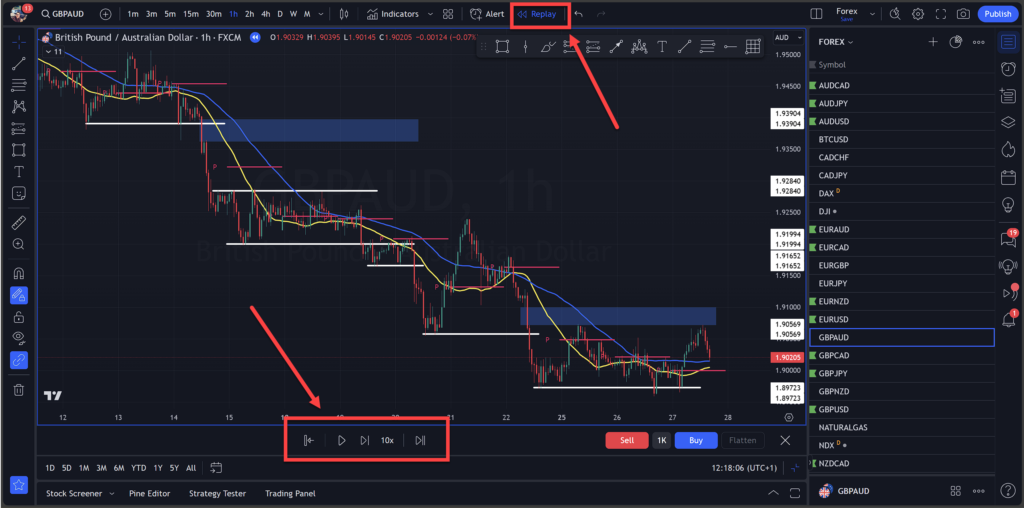
- Advanced platforms offer simulation environments, including historical backtesting and market replay features.
- Allows you to:
- Execute strategies in past market conditions
- Test extreme volatility scenarios
- Evaluate risk-adjusted returns
CEO Insight: Treat simulations as scenario planning, preparing for unexpected market conditions before committing capital.
2.4 Contests and Practice Challenges
- Some brokers and educational platforms run trading contests with virtual funds.
- Benefits:
- Realistic competition
- Exposure to order execution pressure
- Motivation to learn discipline and decision-making
Professional Tip: Participate for learning and benchmarking, not for immediate profit expectations.
2.5 Learn Through Educational Platforms
- Many platforms offer interactive courses with paper trading integration.
- Features:
- Guided tutorials
- Step-by-step strategy exercises
- Risk management frameworks
CEO Insight: Treat it as corporate training for personal financial literacy—the ROI is knowledge, not capital gains.
3. Best Practices While Practicing Risk-Free
3.1 Treat it Seriously
- Even if it’s “fake money,” execute trades with discipline.
- Track trades, record outcomes, and analyze mistakes.
3.2 Use Realistic Position Sizing
- Simulate trades with sizes proportional to real capital.
- Helps you understand risk exposure and emotional management.
3.3 Review and Reflect
- Conduct weekly or monthly reviews.
- Identify patterns in your decision-making, emotional triggers, and system flaws.
3.4 Document Lessons Learned
- Keep a trading journal like a CEO keeps a business journal.
- Include rationale, market conditions, outcomes, and takeaways.
4. Transitioning from Risk-Free to Real Capital
- Only move to real trading after consistent success in demo or paper trading.
- Start small—allocate a fraction of capital.
- Maintain strict risk management rules.
- Gradually scale as confidence and results validate your approach.
CEO Insight: Think of this as phase-gated investment approval. Don’t commit fully until all checkpoints are passed.
5. Psychological and Strategic Lessons
- Risk-free practice helps train emotional discipline, which is more valuable than any strategy.
- You learn how to:
- Handle market volatility
- Stick to rules
- Avoid impulsive decisions
- This approach mirrors corporate risk management—experimenting safely before fully committing resources.
6. Conclusion: Risk-Free is Not Zero Effort
Starting risk-free is about structured learning and strategic simulation. Key takeaways for CEOs and professionals:
- Use demo accounts, paper trading, and simulation software for real-market experience.
- Treat practice seriously, tracking metrics, and reviewing performance.
- Build emotional discipline and risk-awareness before committing capital.
- Transition to real investment gradually and strategically, maintaining a risk-first approach.
“The safest way to learn is to simulate, measure, and refine—real capital comes later, after lessons are mastered.”
Summary:
In this article you will learn �How day trade risk-free without risking a single penny�
Inspite having best trading plan but you’ll never make any money if you don’t take action and actually start trading. Find out more inputs in this article.
Keywords:
daytrading system
Article Body:
You can have the best daytrading plan but you’ll never make any money if you don’t take action and actually start trading. But how can you start without risking a single penny of your own money?
After all, you are still new to trading and don’t want to lose thousands of dollars because you made a small mistake in your trading plan, do you?
The best thing you can do to get started is to get a so-called “Paper Trading Account”. And the best: You can get a paper trading account for free from your broker. Or just contact me and I’ll set you up with a free paper trading account.
So what is a paper trading account?
A paper trading account let’s you trade your system with “virtual money”. You will get live quotes and can enter the trades according to your plan. The daytrading system will simulate fills, and you’ll find yourself in a trading position. Paper trading accounts show the profit and loss in real time, and you can see LIVE how much money you are making or losing. Keep in mind that we’re talking about “virtual money”, so actually you’re not making any money yet.
Why you MUST trade your day trading system on a paper trading account first.
The biggest enemy of a trader is discipline. Traders lose because of the lack of discipline. Your day trading plan might be excellent, but if you don’t have the discipline to follow your trading plan then you’re doomed. Trading your system on a paper trading account will help you to gain confidence in your daytrading system and developing the needed discipline to actually make money with it.
Don’t make this mistake
Many traders start “improving” their trading system after they experienced a loss or a few losers in a row. Though encountering a loser might be exactly within the expectations of your system, you start questioning the system. You start “improving” the system by changing a few parameters or adding some filters. You forget that you tested your system on more than 2,000 trades; you traded it for a few days and think that’s it needs some “fine tuning”.
That’s the biggest mistake a trader can make. If you developed your system based on the outline I gave you in Step 1 and tested it against the principles I gave you in Step 2, then most likely you have a robust daytrading system.
Keep in mind that trading a system does NOT mean having an ATM in your front yard. Losses are part of our business, and NO trading system has an equity curve that’s straight pointing up without any dips. You need to trade your system for at least 40 trades before you should think about modifying it.
How to become a successful trader
In order to become a successful trader you need a trading plan. After reading thus far you already figured that out, did you? 🙂
Equally important is having the discipline to follow the plan.
Lack of discipline is caused by your emotions, basically greed and fear:
You fear losses and if you’re experiencing a winner you become greedy. And that’s when you start tampering with your system: You might want to give your trade “a little bit more room” and increase the stop, or you want to “get a few dollars more” and start moving your profit goal. And BOOM: You just lost the discipline you need.
By watching your trades on a paper trading account you will learn a lot about yourself and how to deal with emotions:
� Can you “pull the trigger” when your entry signal appears?
� How do you feel when you see the trade moving against you?
Do you feel the urge of moving your stop loss?
� How do you feel when the trade makes a profit?
Do you want to get out?
Do you want to stay in a little bit longer?
� Do you have the discipline to trade your system according to your rules?
Trading a system on a paper trading account will help you:
� Watching yourself and your feelings.
� Helping you dealing with your feelings.
� Developing the discipline you need to become a successful trader.
� And of course: testing your trading system under “realistic” market conditions
A neat trick to increase your learning curve
The best way to trade your system is to fully automate it!
By automating a system you’ll immediately gain these four advantages:
Advantage #1: Discipline
The easiest way to follow a trading plan is to automate it. Almost every trading system can be automated, and you could let the computer trade for you. You won’t have to worry about your discipline any longer, as the computer mechanically trades every setup for you.
Advantage #2: Controlling your emotions
Automating a system removes emotions from trading. If you don’t automate your strategy try to make decisions when the market is moving, you are liable to become emotionally attached to positions. You may experience panic and indecision when the market does not move in your favor, as you do not have a prepared response. That’s when most traders lose their money. If you automate your system the computer will trade for you no matter what the market does.
Advantage #3: Controlling your losses
You probably have heard the saying Let your profits run. Unfortunately most traders let their losses run. Automating a trading system will get you out of a position when the predefined stop is hit. Unless you override the system to give the trade a little bit more room the computer will stop the loss and therefore limit your losses.
Advantage #4: Commitment
You won’t believe how many traders show a lack of commitment and therefore lose money. Lack of commitment means that they stop trading after the first loss, and don’t give their system a chance to make back the money they lost. Trading is not a one-way street, and losses are part of our business. If you can’t accept the fact that there will be losses, you shouldn’t trade. Fortunately the automation of a trading system can help you to overcome this problem; an automated trading system continues trading according to the rules, and therefore adds much more consistency to your trading.
The next step
If you read until here, then you learned a lot. By know you know
� How to define your financial and trading goals.
� How to select the right market for your trading goals.
� What timeframe you should trade in.
� The difference between trading styles and how to find the right one for you.
� How to create a basic trading plan.
� How to make sure that your trading plan will work in reality
� How to start trading your system without risking a single penny
� What it takes to become a successful trader
� How to develop the habits of successful traders
� A shortcut to become a successful trader
Now the ball is in your court. It’s up to you to take the first step.
If you want to get started within the next 24h, then you should definitely check out the trading systems Smart Start and EaglePro.
Both systems are fully automated, and they have a risk/reward ratio that’s perfect for beginners. Each system comes with a free paper trading account that lets you test the system risk-free.
It’s your turn now.
Author�s name
Markus Heitkoetter
Author’s Info:
Markus Heitkoetter is a 19 year veteran of the markets and the CEO of Rockwell Trading. For more free information and tips and trick how to make consistent profits with online trading, visit his website www.rockwelltrading.com.

Tinggalkan Balasan